
Opinion: To save Muslim lives, let Muslims tell their own stories
Opinion by Mohammad bin Abdulkarim Al-Issa
June 25, 2021
Mohammad bin Abdulkarim Al-Issa is an Islamic cleric and the secretary general of the Muslim World League.
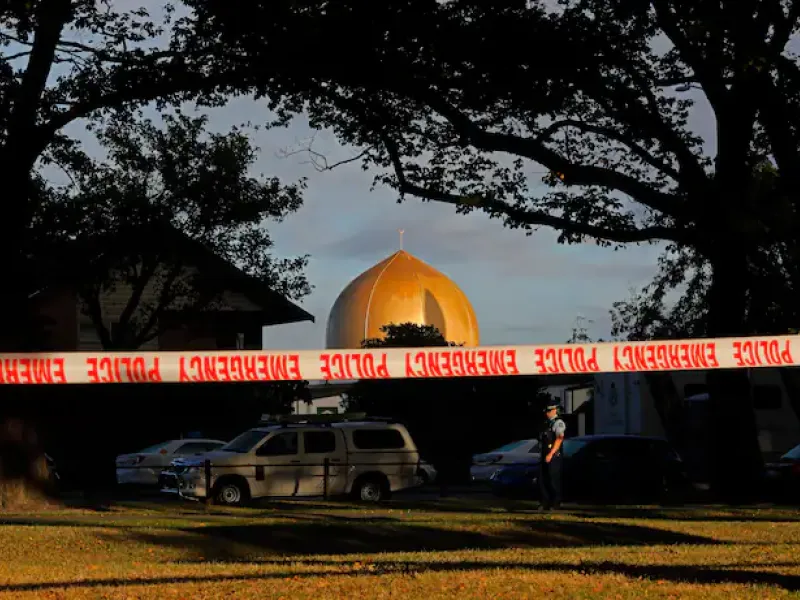
This month, a Canadian Muslim family was nearly wiped out after four members were killed in an Islamophobic terror attack, while the fifth — a 9-year-old boy — was left with serious injuries. This came two years after a gunman murdered 51 Muslims on the other side of the world, at a pair of mosques in Christchurch, New Zealand. In the face of such mindless hate, many are asking what more can be done to save Muslim lives.
One way forward begins simply: Let Muslims tell their own stories.
Muslims often do not have agency over even their most traumatic stories. Earlier this month, a film called “They Are Us” was announced, starring Rose Byrne as New Zealand Prime Minister Jacinda Ardern. The film focuses not on the murdered Muslims and their bereaved families, but on Ardern’s experience of the terror attacks. Even when portraying the worst instance of Western Islamophobia in years, Muslims are reduced (at best) supporting roles. The film was denounced by Ardern herself, who said her story is “not the one to be told.”
The chronic under representation of Muslims in Hollywood and other Western media cannot be separated from the widespread bigotry faced by many members of our faith. This year, Islamophobia — which is not just the fear and hatred of Islam but also includes anti-Muslim discrimination and violence — reached “epidemic proportions.” The United Nations reported that nearly 1 in 3 Americans, and an even higher percentage of Europeans, view Muslims negatively.
Islamophobia is grounded in misunderstanding and the failure to comprehend our diverse beliefs and respect our rich faith. The potential for intolerance, discrimination and even violence is significant. To convey Islam as part of the rich tapestry of human culture and civilization, Muslims should have the opportunity to define and explain Islam — on our own terms.
Instead, we are faced with pernicious narratives that reduce us to caricature: either violent oppressors or the violently oppressed. In the case of “They are Us,” we are the latter.
The denial of telling our own stories is not exclusive to Muslims.
This month, Canadian sitcom “Kim’s Convenience” was criticized by its own cast for producing “racist” story lines and perpetuating one-dimensional Korean characters. Last week, Lin-Manuel Miranda apologized for the failure to include Afro-Latino characters in the film “In the Heights.” The criticism of “They Are Us” for how it frames the 2019 Christchurch massacre is part of this broader context, yet also specific to how Muslims are depicted.
Violent tropes are rampant in Western culture, while nuanced and authentic representations of Muslims are rare. If this is all that is portrayed on mass media, why would Muslims be viewed as anything but vectors of intolerance, violence and oppression? Research by the Annenberg Inclusion Initiative reveals that Muslims hold just 1.6 percent of speaking roles in popular Western films. In those, 53.7 percent were targets of violence and 32.8 percent were perpetrators of violence. Nearly 90 percent of Muslims on screen spoke no English, or did so with an accent, and almost 60 percent were immigrants or refugees.
Despite this context, times are finally changing. In recent years, people have embarked on vital conversations concerning the portrayal of minorities. Increasingly, we rightly hear the importance of letting the marginalized speak for and define themselves. In this case, it starts with Muslims themselves.
The Muslim World League’s #RejectHate campaign, which combats online hate speech, is being complemented with a broader commitment to Muslim storytelling. Oscar-nominated actor Riz Ahmed, who said a lack of positive Muslim representation in media “measures its cost in blood,” recently published “The Blueprint for Muslim Inclusion,” which assists filmmakers in sharing the captivating life experiences of the world’s many Muslims. This blueprint and other projects such as Ahmed’s Pillars Artist Fellowship, which financially supports and trains aspiring Muslim artists, are welcome and necessary.
Those in the arts, media and entertainment — Muslim and otherwise — who are eager and able to help Muslims tell their stories should share their voices. In so doing, we can contribute to de-escalating the hate targeted at the world’s 1.8 billion Muslims, which only fuels division on a global scale.
Representation can change how Muslims are understood, softening hearts and changing minds. This, in turn, can transform Muslims from enemies and strangers to colleagues and neighbors.
Ultimately, this is crucial to a future in which Muslims around the world can take family walks or pray at the mosque without fear for their lives.
reference