

Social media brings out the hate in individuals
World PeaceA perusal of social media content shows how those of all backgrounds violate the most sacred tenets.
“Do not hate one another,” the Prophet Mohammad teaches. “Do not turn away from one another. Do not undercut one another.”
Similarly, St. Paul offers in Ephesians: “Let no corrupting talk come out of your mouths, but only such as is good for building up, as fits the occasion, that it may give grace to those who hear.”
In Judaism, the concept of “hotzaat shem ra” forbids defamation. In Buddhism, divisiveness runs contrary to the values of right speech. Even secular traditions from ancient Greece to today offer us variations of the Golden Rule: Avoid doing what you would blame others for doing.
Yet even a cursory perusal of social media content published around the world shows how wantonly individuals of all backgrounds violate these most sacred tenets. Every day hundreds of thousands of tweets, snaps, updates and posts break the hate speech policies created by social media platforms. The problem is only getting worse.
When describing what constitutes virtuous behavior toward one another, none of our faiths or philosophies include a special exception for social media. There is no asterisk to be found on the topic of proper interpersonal conduct in the Quran, the New Testament, the Talmud or any other religious text. Nor is there a moral carve-out buried in the footnotes of the humanist canon.
Around the world, diverse legal foundations and statutory frameworks guide us. But the peaceful religions and belief systems that structure our societies impart that online hatred has no place in our world. Men and women should not have to bear the psychological and even physical strain of social media abuse. We have seen how no one is immune when social media platforms allow for vile threats and dehumanizing comments, often cloaked behind the protection of fake names and false images.
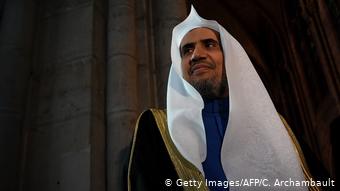
By Mohammad Al-Issa