

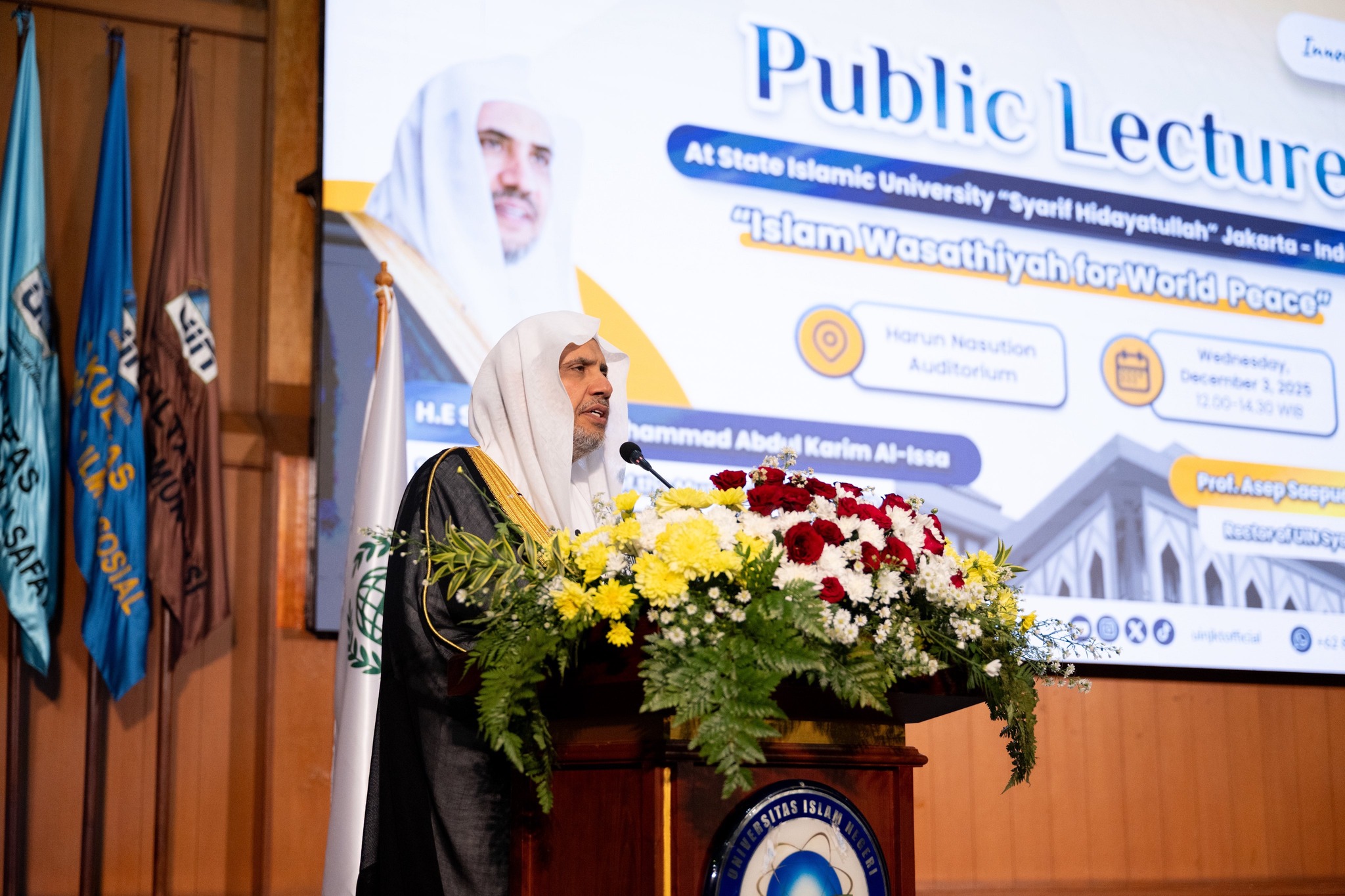
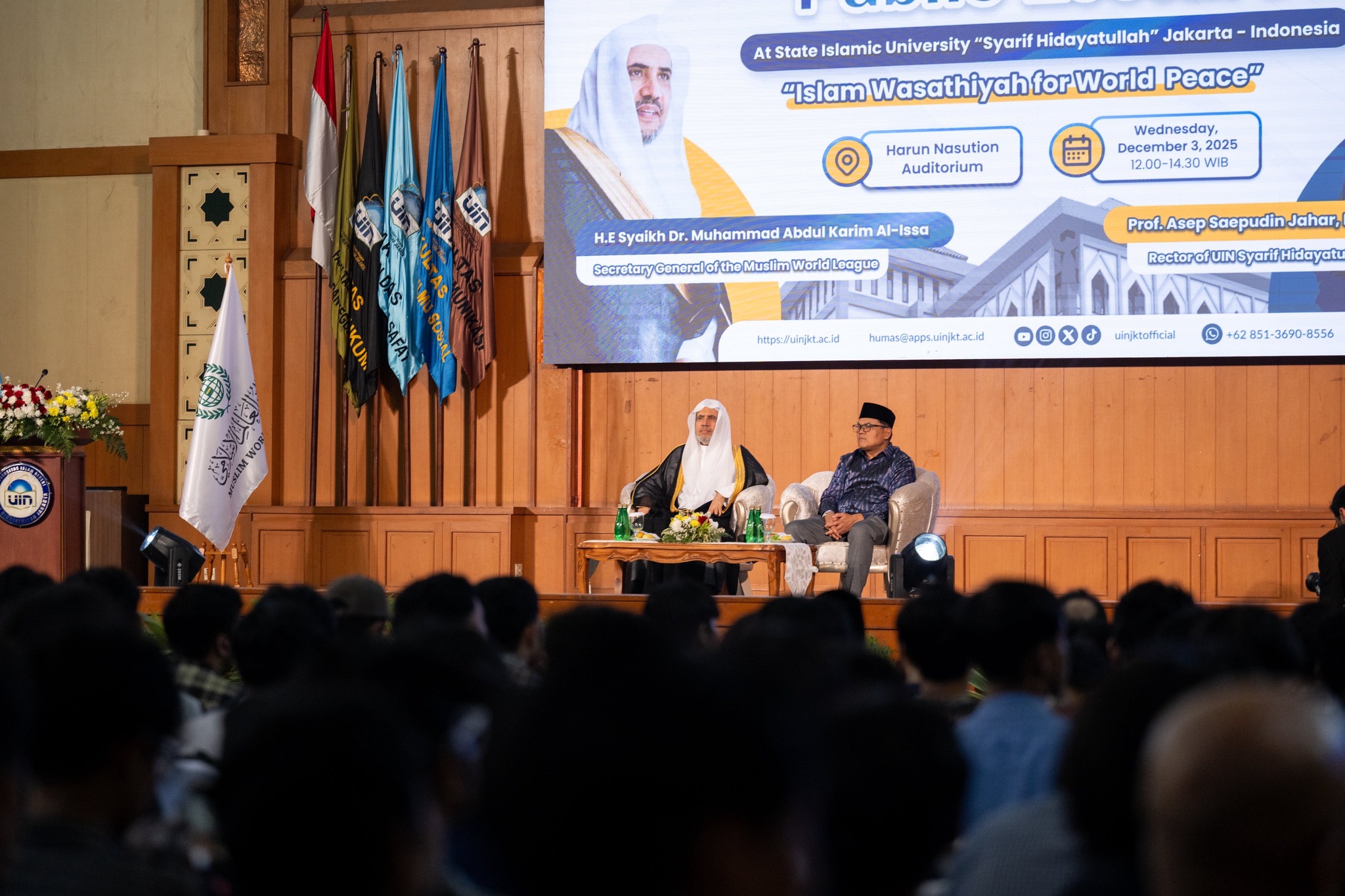
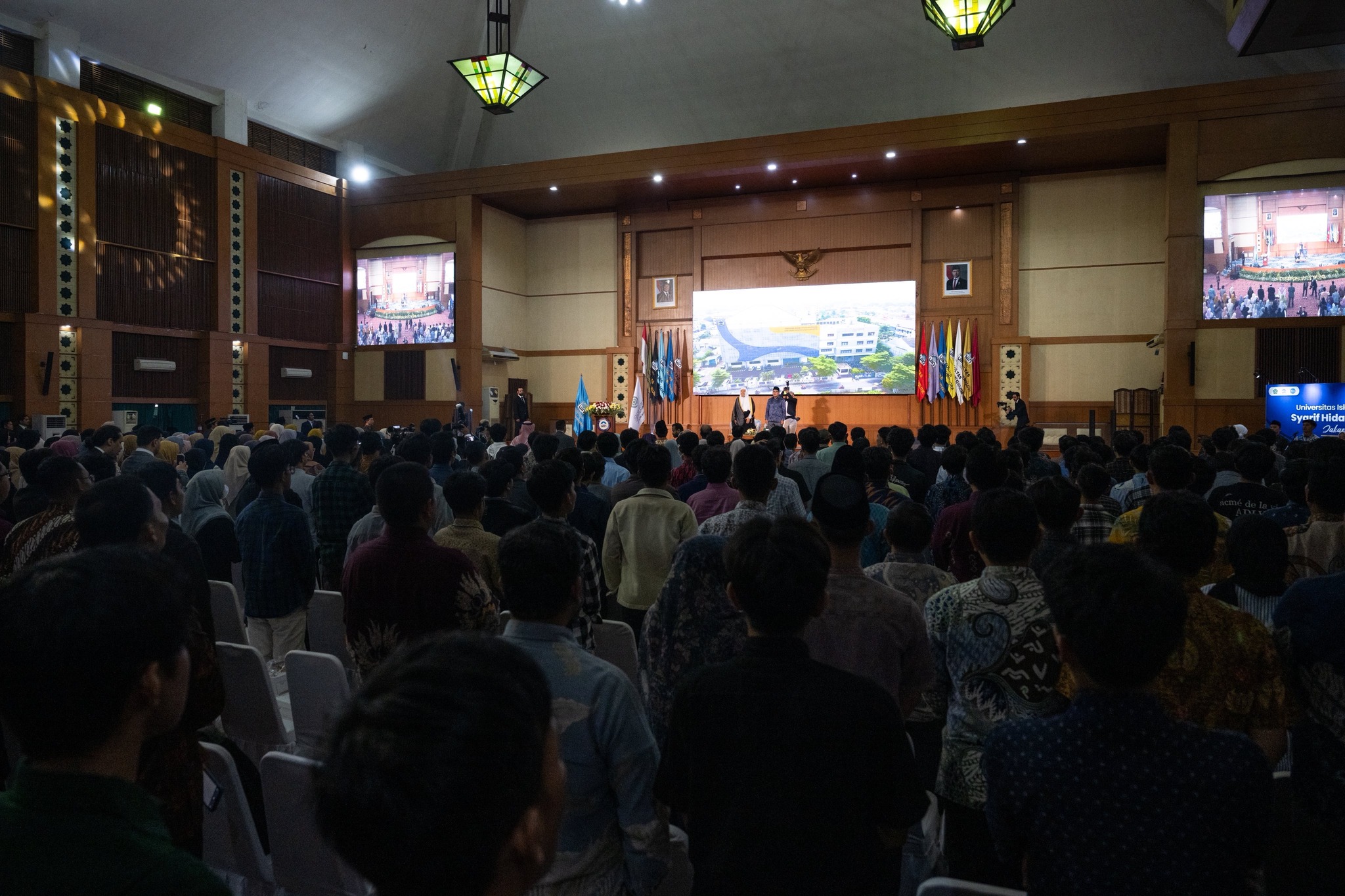
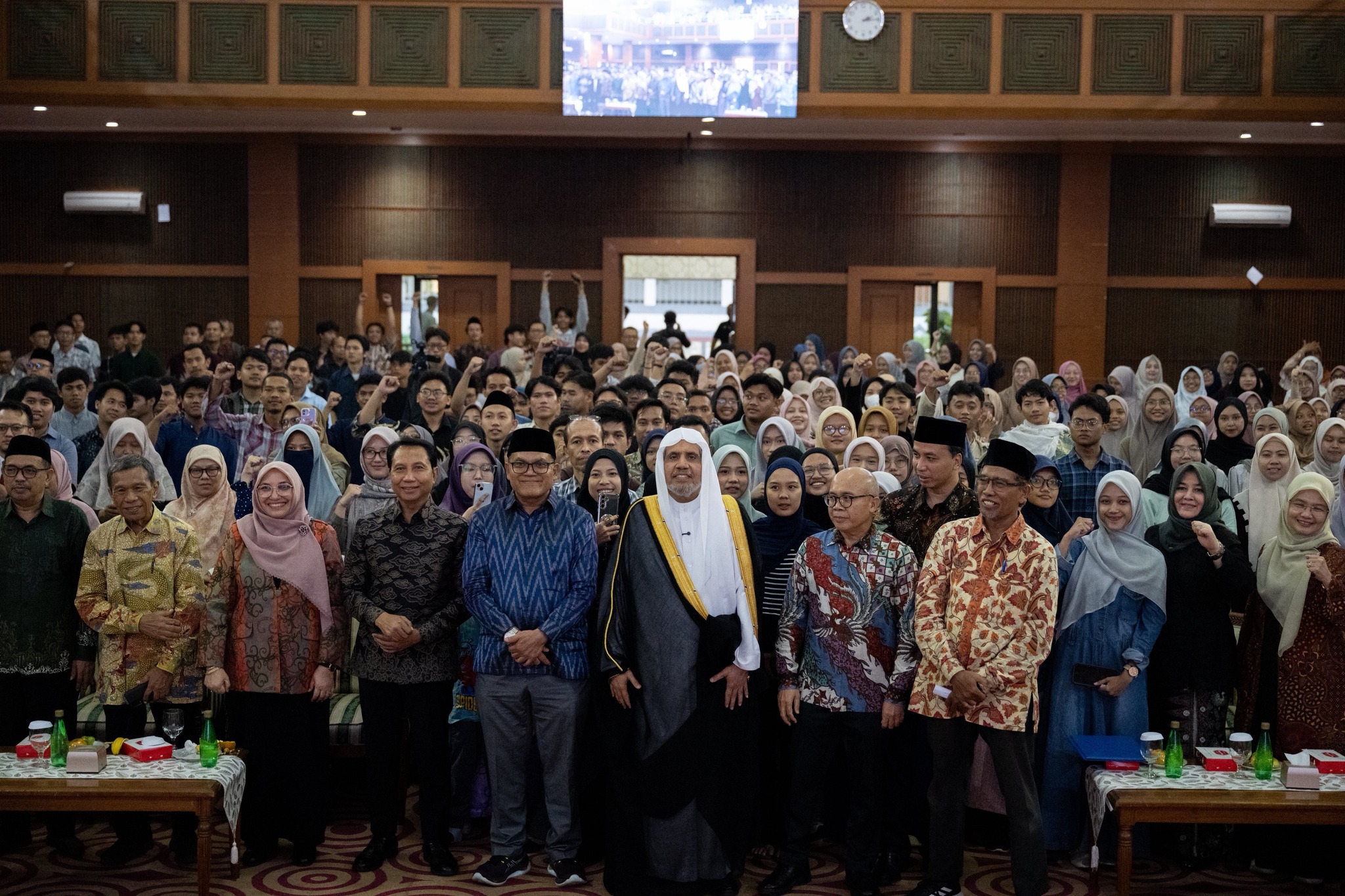
H.E. Sheikh Dr. Mohammed Al-Issa, delivered a public lecture at the State Islamic University “Syarif Hidayatullah” in the Indonesian capital, Jakarta
Latest NewsThis afternoon:
H.E. Sheikh Dr. Mohammed Al-Issa, Secretary-General of the Muslim World League (MWL) and Chairman of the Organization of Muslim Scholars, delivered a public lecture at the State Islamic University “Syarif Hidayatullah” in the Indonesian capital, Jakarta — the oldest and largest of the country’s universities, with two thousand faculty members. The lecture was attended by the university’s president and vice presidents, its leadership, members of the faculty, and a select group of postgraduate students, in addition to representatives of Indonesian religious and intellectual institutions.
In his scholarly lecture, H.E. discussed the Muslim World League’s efforts to promote the principles of moderation and coexistence, through which it has become today a leading global reference in this field—stemming from an Islamic methodology grounded in the correct understanding of Islam’s message, founded upon mercy, justice, and moderation.
The lecture also presented the historical documents issued by the MWL, foremost among them the “Charter of Makkah,” which received unanimous approval from the senior scholars of the Ummah and is considered a pivotal reform document for reinforcing moderate discourse and confronting extremist rhetoric.
It also addressed the “Charter of Building Bridges between Islamic Schools of Thought and Sects,” which emphasized the major commonalities shared by the Ummah and called for unity of ranks and respect for doctrinal diversity, viewing it as an enrichment to the broader Islamic tradition rather than a cause for division or conflict.
H.E. noted that the Member States of the Organization of Islamic Cooperation (OIC) had endorsed the Charter of Makkah and recommended that it be utilized across Islamic countries in religious, educational, and cultural institutions.
The OIC Member States also highlighted the historic, all-encompassing conference for the “Charter of Building Bridges between Islamic Schools of Thought and Sects,” and the charter it produced, which was regarded as a roadmap for advancing joint Islamic doctrinal efforts. It outlined an approach—based on shared foundations—for addressing major Islamic issues that require the presence of scholars, such as the phenomenon of Islamophobia and the distortive methods it carries, whether stemming from ignorance or deliberate intent, as well as the related misconceptions that, in some cases, must be addressed through a unified Islamic discourse.
H.E. further explained that a cooperation agreement had been signed to implement this Charter in Islamic countries, between the Secretary-General of the Muslim World League and the Secretary-General of the Organization of Islamic Cooperation.
The lecture also addressed the “Building Bridges between East and West” Initiative, which the MWL launched from the United Nations platform in New York, in the presence of leaders of the international organization and a significant number of religious leaders, as well as parliamentary and intellectual figures from across the world. The initiative aims to foster meaningful friendship and tangible cooperation among the peoples of the world to achieve peace, harmony, and prosperity, and to strengthen their international charter in light of shared human values. This comes as an effort to confront the theories, slogans, and practices of “civilizational clashes,” “political conflict,” and “multiple divisions,” while respecting the religious and cultural particularities of all and upholding their human dignity.
The lecture praised the national and global model of the Republic of Indonesia, which reflects the true essence of the moderation and balance of our noble religion. It also showcased examples in this regard that the MWL highly regards and consistently commends at the global level.
The lecture further presented examples from Islamic legislation—particularly from the noble Prophetic Sirah—demonstrating Islam’s tolerance and its elevated etiquette in dealing with all people, as well as its respect for shared human values as part of the noble character traits that our master and noble Prophet (PBUH) was sent to perfect.