
Combating anti-Semitism and anti-Muslim hatred is a moral obligation
By: Mohammad bin Abdulkarim Al-Issa
While in London and Oxford recently, I was struck by something that the UK’s great institutions have long understood but that too many societies are undervaluing: that our differences, when handled with honesty and respect, are not a threat to societal cohesion but its very foundation.
At an interfaith workshop at the Oxford Centre for Islamic Studies, I was joined by leaders representing Muslim, Christian and Jewish communities. All were united in their belief that multifaith engagement is the most effective way to build trust and heal divisions between communities.
They recognise that religious diversity is not a challenge to be managed, but a core component of thriving societies.
The situation outside the conference hall is sadly bleaker. The Middle East conflict has cast a long shadow in the UK and beyond. It has deepened grief and hardened divisions that responsible leaders on all sides must work hard to repair. I understand the depth of feeling that the conflict has caused. No one who has witnessed suffering, or who carries responsibility for communities caught in its wake, can be unmoved.
But I want to make an argument that I believe matters for the UK and for societies more broadly: international crises must not be permitted to corrode trust between communities at home or become a pretext for hostility against those with a different faith to our own.
The rise in both anti-Muslim and anti-Semitic incidents in the UK, fuelled by the conflict, is deeply concerning. Over the past year, Tell MAMA, the organisation which monitors anti-Muslim hatred in the UK, recorded one of the sharpest rises in incidents since its founding, with thousands of reports of harassment, vandalism at mosques, and abuse online and offline. Recent Metropolitan police statistics show anti-Semitic hate crimes in London rising by 72 per cent in May, compared to the previous month.
As Secretary-General of the Muslim World League, we have been unequivocal in our condemnation of both Israel’s military operations in Gaza and across the region, as well as the savage October 7 attacks that preceded them.
The sanctity of human life is, of course, a universal value shared by Muslims and other global faiths. But the depth of feeling and pain caused by the conflict must not become a pretext for further violence and intolerance. This will only lead to more division and hatred.
As faith leaders, we all have a duty to reach out to our communities to prevent the conflict from being used as an excuse to whip up either anti-Muslim hatred or anti-Semitism.
While in London, I met Islamic religious leaders and business figures and was truly encouraged by the example they are setting to Muslims throughout the UK in promoting coexistence and social cohesion.
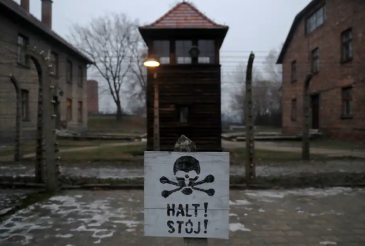
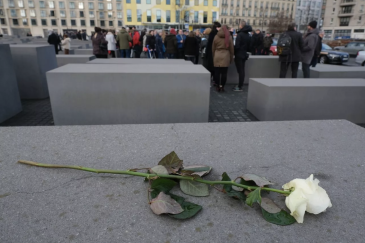
On anti-Semitism, I want to be clear. Anti-Semitism is a form of hatred that has cost millions of Jewish lives across history, and which finds no sanction in the values of Islam. Combating it is both a religious and moral obligation. To remain silent when a community faces intimidation is a failure of the moral responsibility we carry as faith leaders, whatever our views on any particular conflict.
During my visit to the UK, I spoke to leaders who recognise the value of speaking to one another rather than past one another. Leaders who recognise that the most effective way to protect our communities is not to erect barriers, but to build bridges between different faiths, bolstering trust and defusing tensions between communities.
This approach is “preventative peace” and deploys dialogue and engagement as tools to bolster trust and defuse tensions between communities before conflict ever arises. It is the best antidote we have to stop overseas conflicts dividing our communities.
It means that we cannot afford to say “no” to interfaith engagement. Dialogue entered into in the spirit of impartiality, deep listening, and mutual respect should always be considered our first line of defence in preventing conflict and preserving peaceful and tolerant societies.
Communities do not clash when they know one another; they clash when they remain ignorant of each other.
The Islamic world is increasingly understanding this pathway to peace. The Charter of Makkah provides Muslims with a unifying moral code to promote moderate Islam, reject extremism, and embrace the importance of interfaith outreach for delivering global peace and cooperation. This historic document spearheaded by the Muslim World League has been endorsed by over 1,200 Islamic scholars from 139 countries.
I believe the UK can also lead by example here. It is home to significant Muslim and Jewish communities, both with deep roots in this country and strong voices in its public life. The health of the relationship between them is a measure of the health of British society itself.
Governments have a role. Education has a role. The media has a role. But the primary responsibility lies with those of us in positions of religious and civic leadership. We determine whether anger is left to fester or is channelled into constructive engagement for reconciliation.
What I heard during my time in London and Oxford gave me cause for optimism. The Muslim World League and I will continue to speak out against injustices on all sides and engage constructively with other faiths. I hope others will join us. The stakes for the UK and indeed all of us are too high for any other course.
This article was originally published in The Telegraph Read here.